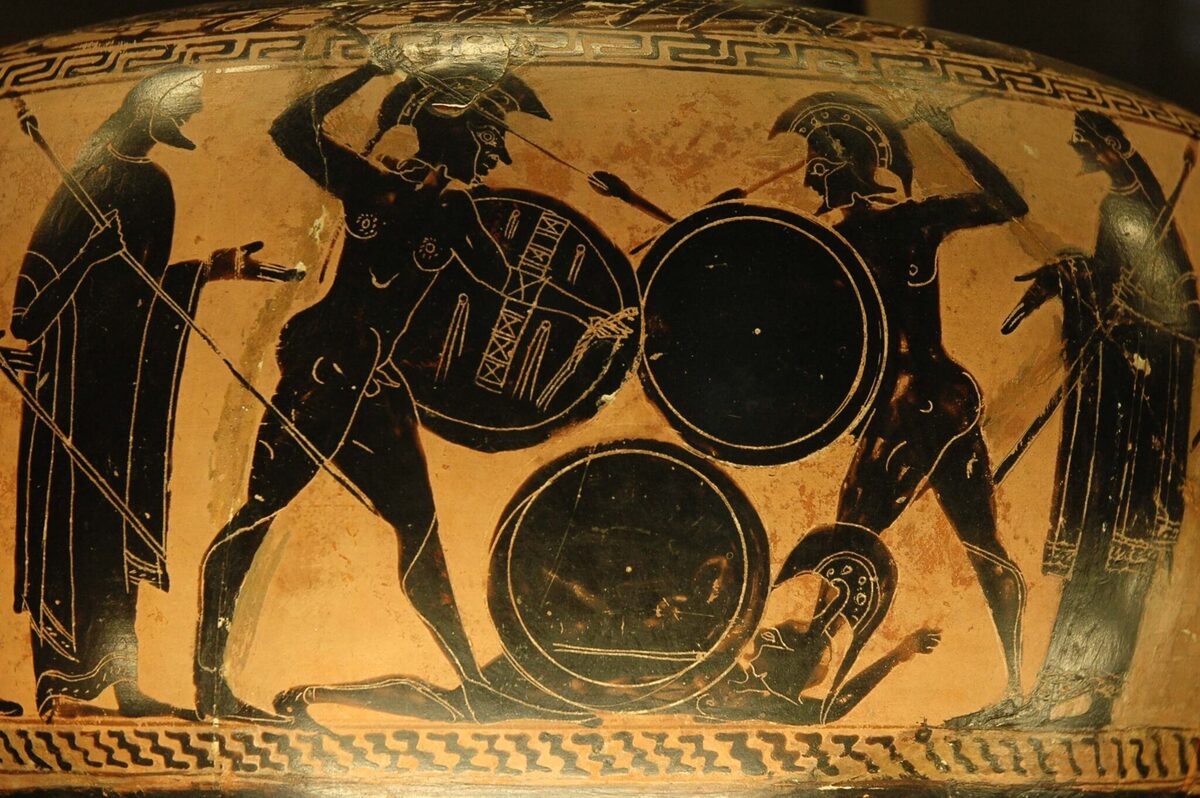
In 415 BC, Athens debated in the assembly whether to send a great expedition to conquer Sicily, at the other end of the known world. The Peloponnesian War against Sparta had already dragged on for years, and the idea was bold: to send an enormous fleet, far from home, to subdue Syracuse. Alcibiades, young and brilliant, championed the venture with promises of glory and wealth. Nicias, a veteran and prudent general, opposed it.
Then something happened that Thucydides, who recounts it in his “History of the Peloponnesian War”, narrates with an almost cruel irony. To dissuade the assembly, Nicias exaggerated the resources it would take: so many ships, so many men, so much money, to make them see the madness of the enterprise. But the effect was the opposite. Instead of taking fright, the Athenians grew even more excited. If it needs that much, it must be worth it. The assembly, swept along by enthusiasm, voted to send a fleet even larger than the one anyone had proposed. The result would be one of the most complete catastrophes of antiquity: the fleet destroyed, thousands dead, and the survivors enslaved in the quarries of Syracuse. It was the beginning of the end for Athens.
The disaster was not decided in Sicily. It was decided in the assembly. By the time the fleet set sail, its fate was already sealed. What sank Athens was the conversation that preceded the expedition. That conversation has all the symptoms of collective overconfidence: contagious enthusiasm, warnings that arrive but in the wrong tone, and those who doubt in silence because no one wants to be the one who puts the brakes on the adventure when everyone else is thrilled.
The useful lesson is not “don’t be bold”. It is understanding how a group talks itself into a decision it is no longer able to examine, and what mechanism can prevent it. One of them has a modern name: the premortem. It consists of imagining, before deciding, that a year has passed and the project has failed, and asking why. Nicias, at bottom, was attempting something similar, but from the opposition. That is why it sounded like obstruction rather than analysis, and the assembly could dismiss him as the pessimist of the day.
In business, the Sicilian expedition repeats itself every time a big bet (an acquisition, entering a new market, an ambitious launch) is decided on a wave of enthusiasm. Whoever raises a hand to point out the risks becomes the brake, and by the next meeting has fallen silent. The remedy is not to ban boldness, but to institutionalise doubt. You make the premortem a compulsory step, a role someone is assigned, so that questioning the decision is their job and not a betrayal. Athens had no mechanism to separate ambition from analysis.
In personal life, the expeditions to Sicily are the momentous, hard-to-undo decisions made at the peak of excitement: changing your life overnight, a major purchase, dropping everything for a project. Enthusiasm, here, is a factor to be wary of precisely because it is pleasant. It is worth asking what your future self, a year from now, would point to looking back from failure. And sleeping on it. The night tends to lower the siren song of enthusiasm just enough.
In learning there is an advantage Athens did not have: we can study its disaster without paying for it. History is a cheap simulation. Learning from the Sicilian expedition means we do not have to repeat it to understand it. They already paid the price. Doing a postmortem on other people’s mistakes, and on our own, is how we accumulate judgement without having to lose a fleet each time.
We should not idealise prudence. The premortem is not paralysis, and excessive caution kills as surely as overconfidence. In fact, the bitterest twist of the story proves it. When the situation was already desperate and it was time to retreat, an eclipse of the moon frightened the superstitious Nicias, who delayed the withdrawal for almost a month on the advice of the soothsayers. That paralysed caution turned a defeat into an annihilation. It is not that doubting always saves you. It is that deciding without examining and examining without ever deciding are two sides of the same error. What saves you is calibrated confidence.
This week’s exercise. Choose a decision that genuinely excites you right now. On a sheet of paper, write this sentence as if it were already true: “A year has passed and this has gone badly”. Below it, note three plausible causes of the failure, without censoring them, and then ask yourself the question Athens did not ask: who around you would have seen these causes coming, and have you silenced them, or have they fallen silent on their own, because you were all too excited?
In the decision that excites you most right now, who is your Nicias? Are you listening to them, or just waiting for them to step aside?
Sapere aude.