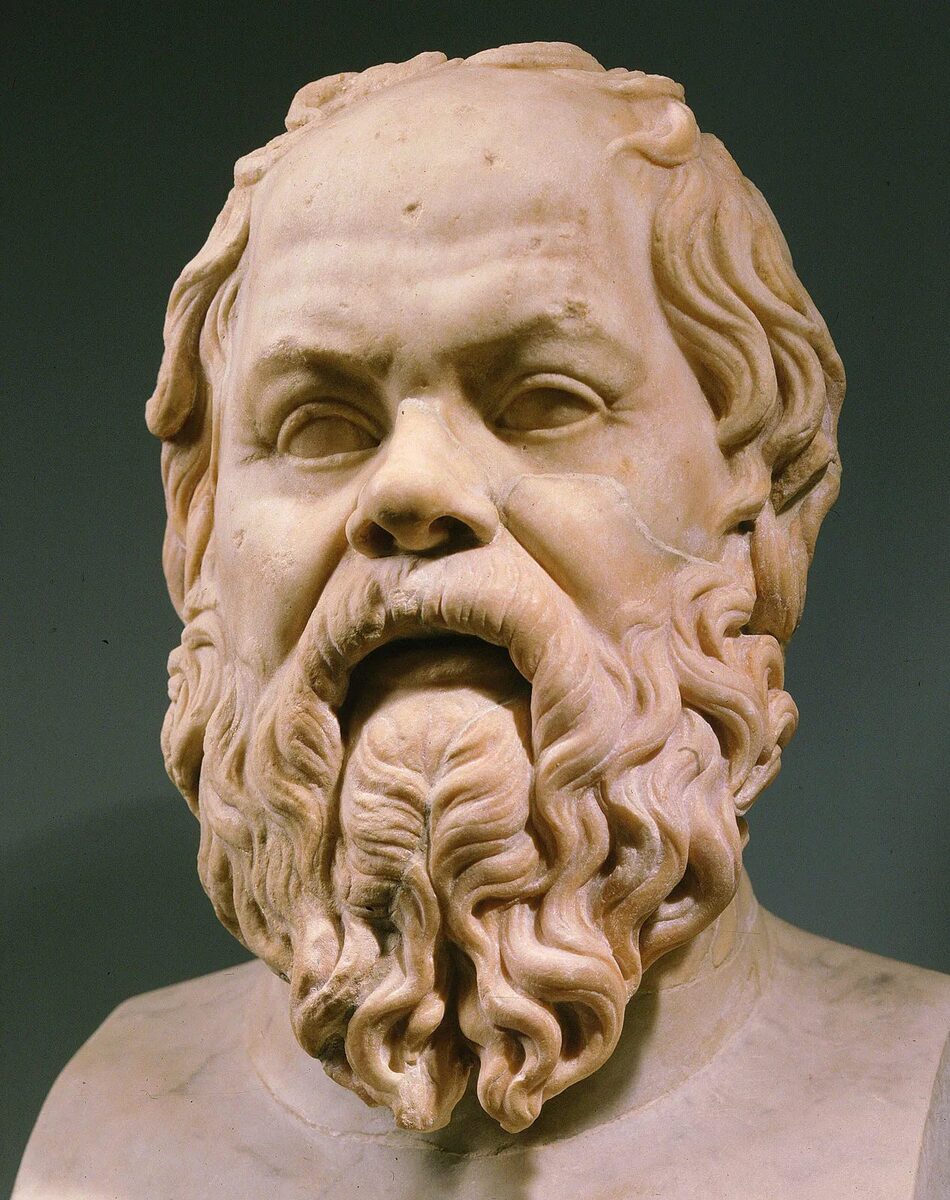
“The unexamined life is not worth living.” The line is Socrates’, Plato records it in the Apology, and we have quoted it so often that it has lost its cutting edge. We repeat it as praise of introspection, as if Socrates were inviting us to gaze calmly at our navel. That was not it. It was the description of a method, and the method is a good deal more uncomfortable than the quotation.
The method is called maieutics. The word comes from the trade of Socrates’ mother, who was a midwife. He held that he did the same work as her, but with ideas instead of children. He taught nothing from the outside. He asked questions until his interlocutor gave birth to what they already carried within without knowing it, or else discovered that what they thought they knew did not hold up.
It is worth pinning down what it is not, because “asking questions” has become a cliché of leadership manuals. Maieutics is not asking kindly so the other person feels heard. It is asking the question that dismantles the comfortable answer. Socrates was not looking for agreement. He was looking for the exact point where a certainty cracks. This work ended in a death sentence, which should remind us that examining does not come free, not even today, when whoever questions the consensus of a meeting usually pays for it in discomfort.
Applied to deciding, it all comes down to a simple, awkward gesture. Before making a decision, examine the decision. Not the data in front of you, but the assumptions from which you framed it.
In business, this has a direct translation. A committee approves a project because the numbers add up and because “we have always done it this way”. The Socratic question is not “are we sure?”, which almost always gets a courtesy yes, because no one wants to be the one who stops the project. It is the premortem question: “if a year from now this has failed, what will the cause have been?”. Forcing yourself to answer it before signing off tends to change the decision, or at least the confidence with which it is made.
In personal life, the mechanism is identical and harder to apply. We ask half the world for their opinion before changing jobs or buying a flat, but we rarely examine our own premise. The question we avoid tends to be “am I choosing this, or am I running away from something else?”.
In learning, Socrates dismantles the idea that studying is accumulating answers. The student who can state precisely what exactly they do not understand has already half solved the problem. Knowing how to ask is not the step before learning. It is learning.
We should not idealise the method. Examining everything down to the bone is slow and can end up paralysing you, and there are decisions that do not deserve that treatment. The point is not to interrogate every trivial choice, but to reserve examination for the decisions that leave a mark. Telling one from the other is, in itself, an act of judgement.
This week’s exercise. Before your next important decision, take a sheet of paper (paper, not the screen) and write the decision as a statement, in a single line. Below it, note three questions Socrates would ask you: what am I taking for granted, what evidence would make me change my mind, and who benefits from my thinking this. Answer them by hand and without haste. The slowness of writing by hand is not a drawback of the exercise. It is the exercise.
The maieutic question that is hardest to formulate is always the one that points at us. What is it, in the decision on your desk right now, that you are avoiding?
Sapere aude.