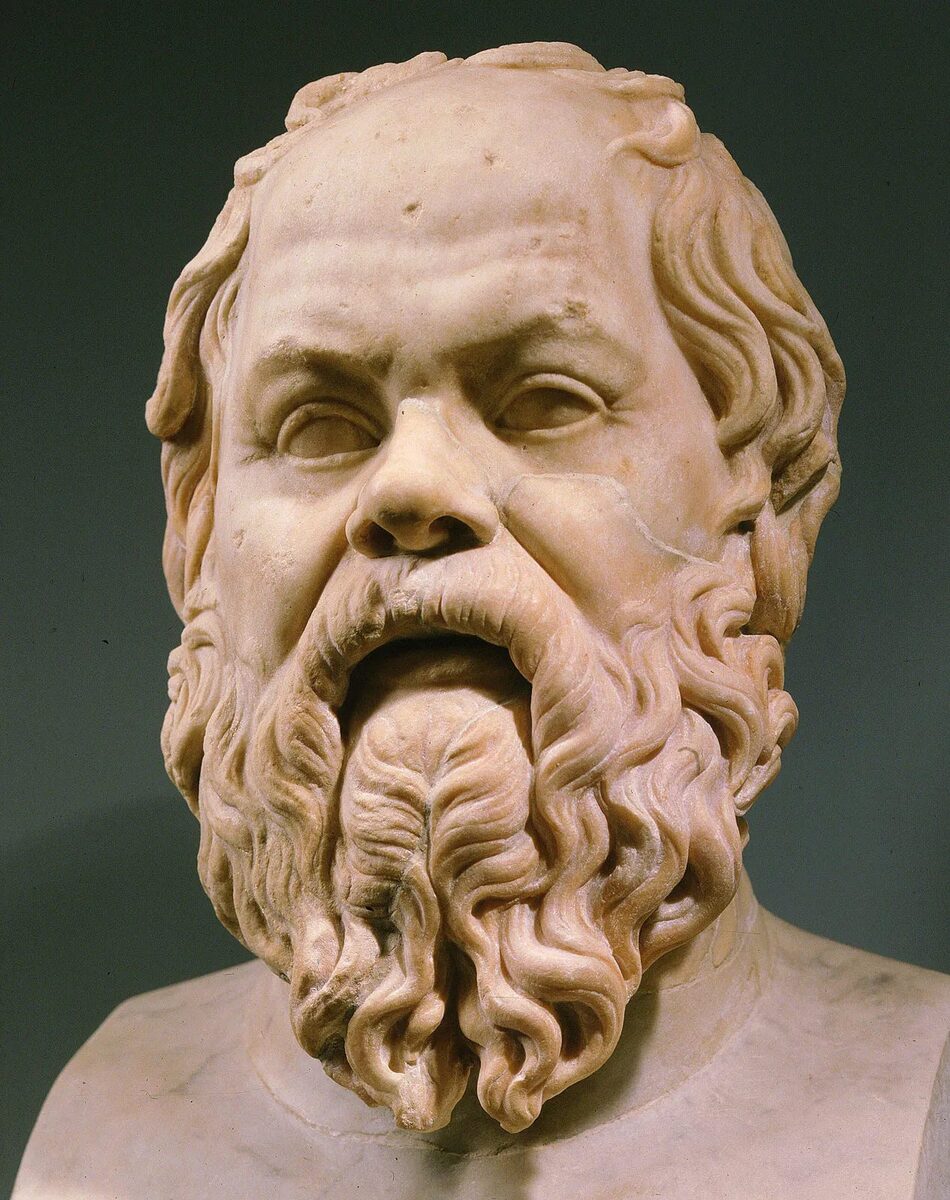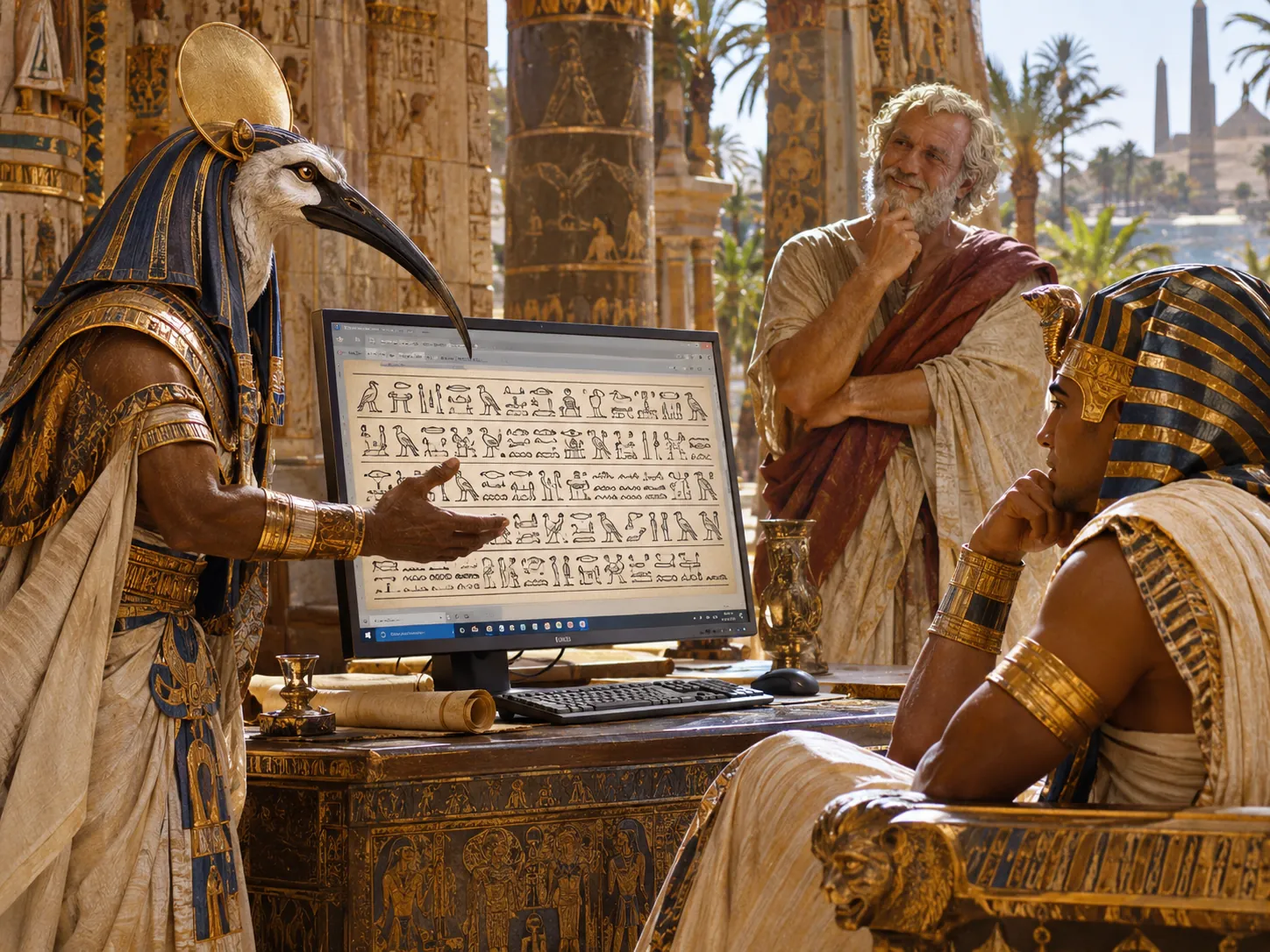
In the Phaedrus, Plato has Socrates tell an Egyptian myth. Theuth, an inventor god, comes before King Thamus to present his creations: numbers, arithmetic, geometry, astronomy, games of dice and, above all, writing. Theuth is particularly proud of this last one. Writing, he assures the king, will make the Egyptians wiser and improve their memory. He has devised it, he says, as a remedy – a pharmakon – for memory and wisdom.
The king is not so sure. The inventor of a technique, he replies, is not the best judge of its effects. Writing will bring forgetfulness to the souls of those who learn it, because they will stop exercising their memory and rely on external marks instead of remembering from within. What Theuth has found is a remedy not for memory but for reminding. His pupils will hear a great deal without having learned it; they will seem to know everything and will know next to nothing. They will have, he concludes, the appearance of wisdom rather than wisdom itself.
The irony is plain: we know this critique of writing because Plato wrote it down. Socrates, who left no texts at all, distrusted books because they cannot answer back. Ask them something, he says in the same dialogue, and they maintain a solemn silence, or keep saying the same thing. They cannot defend themselves or adapt to the person reading them. Live dialogue, by contrast, forces you to think.
The word Theuth chooses is telling. Pharmakon means both remedy and poison. Any technique that spares us an effort can make us stronger or weaker, depending on how we use it. Writing allowed us to store and pass on knowledge as never before, and it also meant we stopped learning whole poems by heart. Both things are true.
Twenty-four centuries later, the conversation between Theuth and Thamus is playing out again, with a far more powerful gift. Artificial intelligence does not just store what we know, as writing does. It drafts, summarizes, argues and answers. We are no longer outsourcing only our memory, but part of our reasoning. Thamus’s warning has never been more relevant. The danger is not that the machine gets things wrong, but that it gives us the appearance of knowing without the process of learning.
In business, the risk is subtle. A report written with AI can be flawless and yet never have passed through anyone’s head. A team that routinely hands off its analysis may gain speed and, without noticing, lose the ability to do that analysis itself when the tool is unavailable or gets it wrong. The useful question for an organization is not whether to use these tools, but which capabilities it wants to keep in-house and in practice, because those are what set it apart.
In our personal lives, Thamus invites us to take stock. How many things could we do fifteen years ago that we now leave to a device? Finding our way around a city, remembering a phone number, doing a sum in our heads, writing without spellcheck. Some of these trade-offs are sensible. Others we never actually decided on; they simply happened.
For learning, the king’s distinction is essential. Having access to an answer is one thing; having understood it is another. A student who asks AI to summarize a book has the information, but has not made the effort that turns reading into knowledge of their own. Learning has always required a certain friction, and a technology that removes it entirely may remove the learning too.
We should not idealize Thamus. History proved him wrong. Writing did not make us more ignorant; it made philosophy, science and Plato’s own dialogue possible. Fears about each new technology, from the printing press to the internet, have often been overblown. The lesson is not to refuse the gift, but to accept it knowing that it is a pharmakon, and to decide deliberately what we still want to do ourselves.
This week’s exercise. List five tasks you now routinely hand over to technology: writing, calculating, finding your way, remembering, summarizing, deciding. Next to each one, note whether you handed it over by choice or out of habit. Pick one you would like to reclaim and, this week, do it yourself at least once, unaided. Notice what you find hard, and what you discover.
Of everything you no longer do because a machine does it for you, what would you still like to know how to do?
Sapere aude.