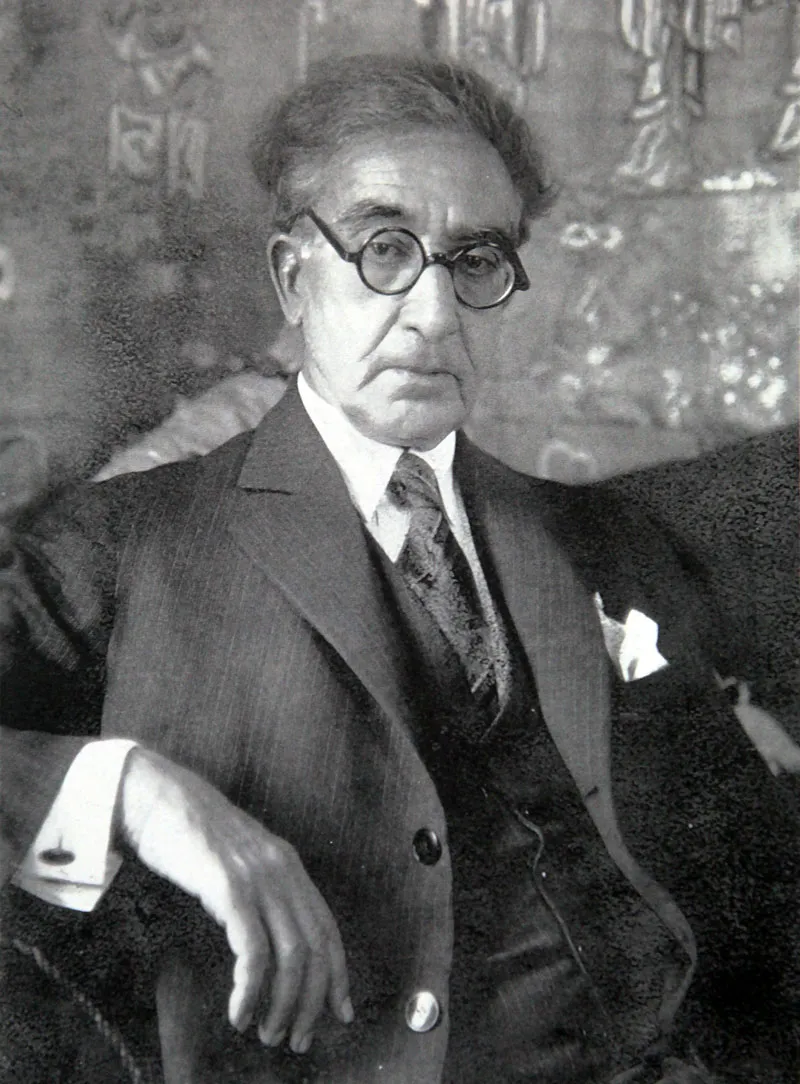
The Greek poet Constantine Cavafy, who lived in Alexandria (Egypt) between 1863 and 1933, took the myth of Ulysses’ return and set it in a short poem, «Ithaca», written in 1911. It does not speak of what happens on the island when you arrive. It speaks of the journey. It addresses a traveller heading for Ithaca and gives them an unexpected piece of advice: «As you set out for Ithaca, hope that the road is long.»
The poem asks that the journey be full of adventure and knowledge. It says you should not fear the Laestrygonians, nor the Cyclopes, nor an angry Poseidon. You will not meet them on the way unless you carry them within your soul. It asks you to arrive at Ithaca old, rich with all you will have gained along the way, without expecting Ithaca to make you rich. It ends with a powerful idea. If you find her poor when you arrive, Ithaca will not have deceived you. Wise as you will have become, with so much experience, you will already have understood what Ithacas mean. In Catalan we know this poem, above all, through Carles Riba’s translation and Lluís Llach’s song.
The idea is simple, though hard to accept. The destination is the pretext that sets you in motion, but the value is in the journey. Ithaca is necessary (without a place to go you do not set sail), but confusing the departure with the prize is the mistake. What enriches you is not touching the island. It is everything you will have learned, seen and become on the way there.
There is a very common life-trap the poem dismantles: living for the arrival, for the achievement. We do it constantly. We tell ourselves we will be happy when the promotion comes, the degree, the house, the sales figure, and so on. Often, though, we get there and the island is poorer than we imagined. Not because Ithaca has deceived us, but because we had asked of it something that was not its business as a goal: to give meaning to a journey we had not known how to live as what it was, a journey.
In organisations, the obsession with the arrival has a recognisable form. Only the result is celebrated (the target hit, the project delivered) and what has been built (and learned) along the way is ignored entirely. But the real return on a hard project is often not just the deliverable, but the team that has learned to do difficult new things and comes out able to do what it could not before. Whoever only looks at the quarter’s figure, for example, misses the one form of wealth that stays: the accumulated capability (experience). And the monsters that stall decisions (the competitor, the worst-case scenario, and so on) are, like Cavafy’s Cyclopes, more inside the head than out at sea.
In personal life, «Ithaca» is almost a therapy against deferred happiness, the career lived as a waiting room towards a moment that is always further ahead. The poem does not say to give up the goal. It says to hope the road is long, which is a way of saying that life is not the island, but the crossing. It is worth distinguishing the goal that acts as a compass (it sets your direction) from the goal that acts only as a prize, and that, once you have it, fades away.
Here we are at the heart of the matter, because learning is exactly this: the wealth that accumulates during the journey. The meaning of a hard book, a degree, a craft, is not the certificate at the end, it is who you are when you get there. Wise as you will have become, with all that experience. Knowledge is not the souvenir you buy on the island. It is what transforms you at each port. That is why the rush to arrive is, in learning, a way of impoverishing yourself. Whoever shortens the road is left without what the road was meant to give them.
We should not idealise the journey, though. “What counts is the road” can easily become an excuse never to arrive, to romanticise sailing without a course. Ulysses, after all, did return home. The poem does not praise drifting, it praises sailing somewhere without the arrival being everything. You need an Ithaca. What you do not need is to make it the only thing that matters. Being lost is not making a journey.
This week’s exercise. Write on a sheet of paper what your Ithaca is right now, the goal that pulls you, the place you want to reach. Below it, answer an uncomfortable question by hand: if you got there and found it poor, what would the journey have given you anyway? Make the list of what you will have learned and what you will have become on the way. If the honest answer is “nothing”, perhaps the problem is not the road. Perhaps you have chosen the wrong Ithaca.
If you reached your Ithaca and found it poorer than you expected, could you say what the journey gave you anyway?
Sapere aude.