Europe lost its summer in 1816. The eruption of Mount Tambora, in Indonesia, darkened the sky, and that year became known as “the year without a summer”. On the shores of Lake Geneva, at the Villa Diodati, a group of young writers kept indoors by the rain took up a challenge from Lord Byron: each of them would write a ghost story. The one that has endured was written by an eighteen-year-old, Mary Shelley. Frankenstein; or, The Modern Prometheus was published in 1818.
The story is so much a part of our culture that everyone thinks they know it, and almost everyone gets two details wrong. The first is that Frankenstein is not the monster but the creator, Victor Frankenstein, a young scientist obsessed with the secret of life. The creature has no name. The second mistake matters more. The tragedy of the novel is not that Victor creates a living being, but what he does immediately afterwards.
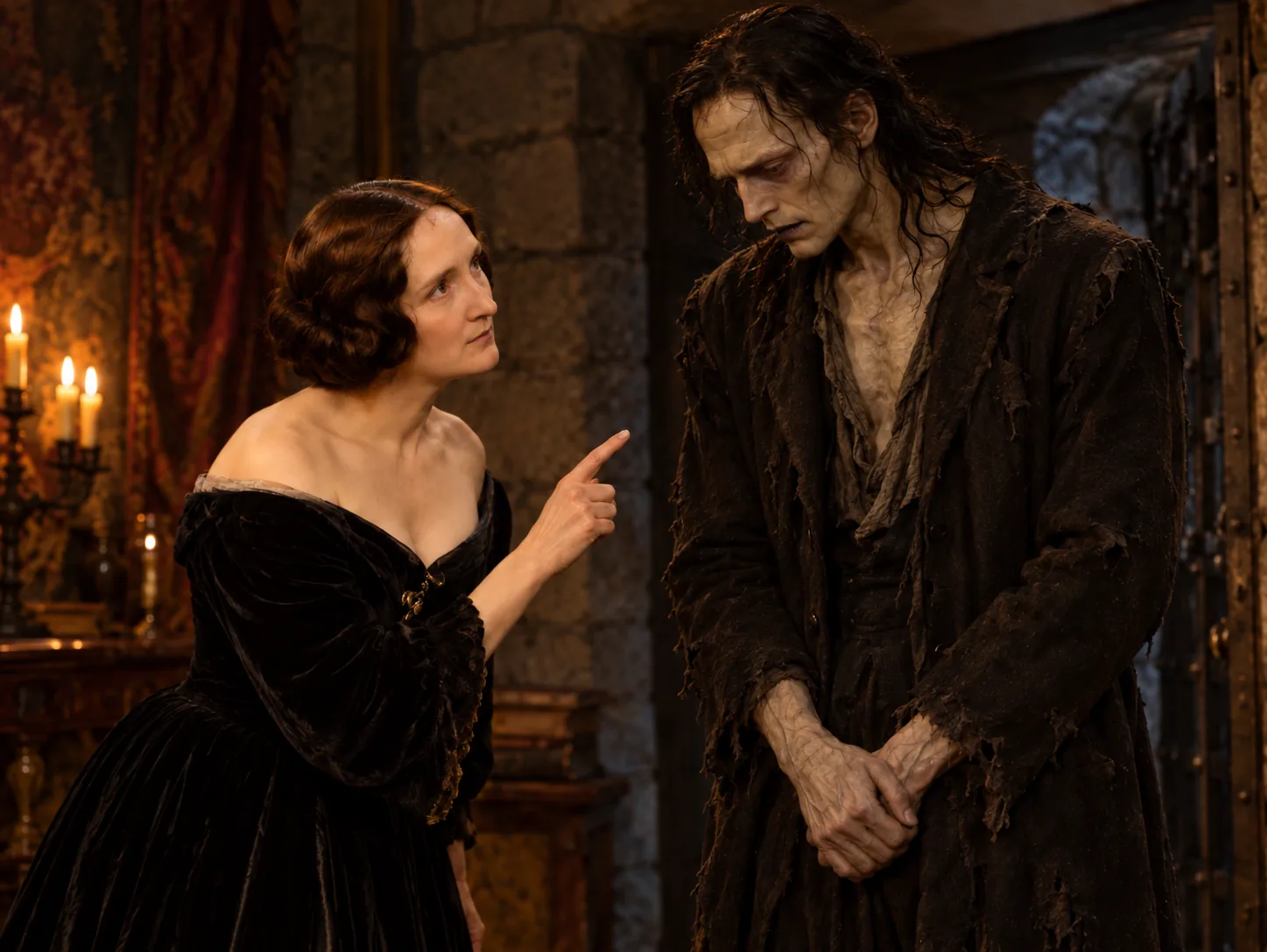
On the night the creature opens its eyes, Victor, who has devoted two years of his life to that moment, looks at it, feels disgust and runs away. He shuts himself in his room, tries to sleep, and the next morning heads out into the street so that he will not have to go back. The creature is left alone, with no one to explain what it is or what the world is. It learns to speak by spying on a family through a crack in the wall, learns to read from books it happens to find, and gradually discovers that everyone rejects it. When it finally meets its creator again, it utters a sentence that sums up the book: “I was benevolent and good; misery made me a fiend.”
Mary Shelley did not write a warning against science. She wrote a warning against a particular way of doing science – and, by extension, technology: that of the creator infatuated with his own success who takes no responsibility for what he has brought into the world. Before creating, Victor never asks what the creature will be for, what it will need, or what will happen if things do not turn out as he hopes. When they go wrong, his first reaction is to look away.
Two centuries later, the parallel is unavoidable. We are bringing into the world systems that learn, with capabilities their own creators cannot always anticipate. The relevant question is not whether we should do it, because it is already being done, but who takes responsibility when the system does not behave as expected. Victor’s temptation is within everyone’s reach: celebrate the launch and look the other way when the consequences arrive.
In business, you do not need to create a creature to repeat Victor’s mistake. It is enough to roll out a tool, a system or an organizational change and wash your hands of it the day after the presentation. Who has to learn to use it? Who answers for it when it fails? Who deals with the side effects on teams, on customers, or on the people left out? Many projects do not fail on launch day. They fail in the weeks that follow, when no one is watching any more. This is happening today with artificial intelligence. A company rolls out an AI tool to its entire workforce, organizes a presentation session and some superficial training, and considers the job done. No one defines which tasks it makes sense to use it for, no one checks whether what reaches customers is correct, no one notices that part of the team has adopted it uncritically while the rest avoids it out of fear. Months later, when a serious error turns up in a report or confidential data ends up where it should not, everyone asks who was supposed to be keeping an eye on it. The answer is no one, because the project was considered closed the day it went live.
In our personal lives, the lesson is more intimate. We all bring things into the world: projects, promises, teams we have built, people who depend on us. Responsibility does not end at the moment of creation; that is precisely when it begins. Abandonment is rarely a dramatic decision. It is usually, as in Victor’s case, a succession of days on which we would rather not look.
When it comes to learning, Shelley’s creature leaves us with an unsettling image: a being with a great capacity to learn that learns alone, without guidance, and draws its lessons from the rejection it meets. Those who learn without support learn whatever their surroundings teach them, not necessarily what we would want them to learn. This holds for machines, and it holds just as much for the people we bring into an organization with no one to welcome them.
We should not idealize this reading. Frankenstein has been used for two centuries as an argument for holding back any kind of innovation, and that interpretation is too easy. The novel does not condemn Victor’s curiosity, but his irresponsibility. The question it raises is not whether we should create, but how: with what foresight, with what care and with what willingness to answer for whatever goes wrong. Not creating has its costs too. Creating and running away is the worst of both worlds.
This week’s exercise. Think of something you have set in motion in the last year: a project, a process, a tool, a team or a commitment. On a sheet of paper, answer three questions. Who depends on it now? What does it need that I am not giving it? What unforeseen effect has it had, and have I faced it or avoided it? If there is something you have not looked at for a while, give it an hour this week.
Which of your creatures has been walking alone for too long?
Sapere aude.