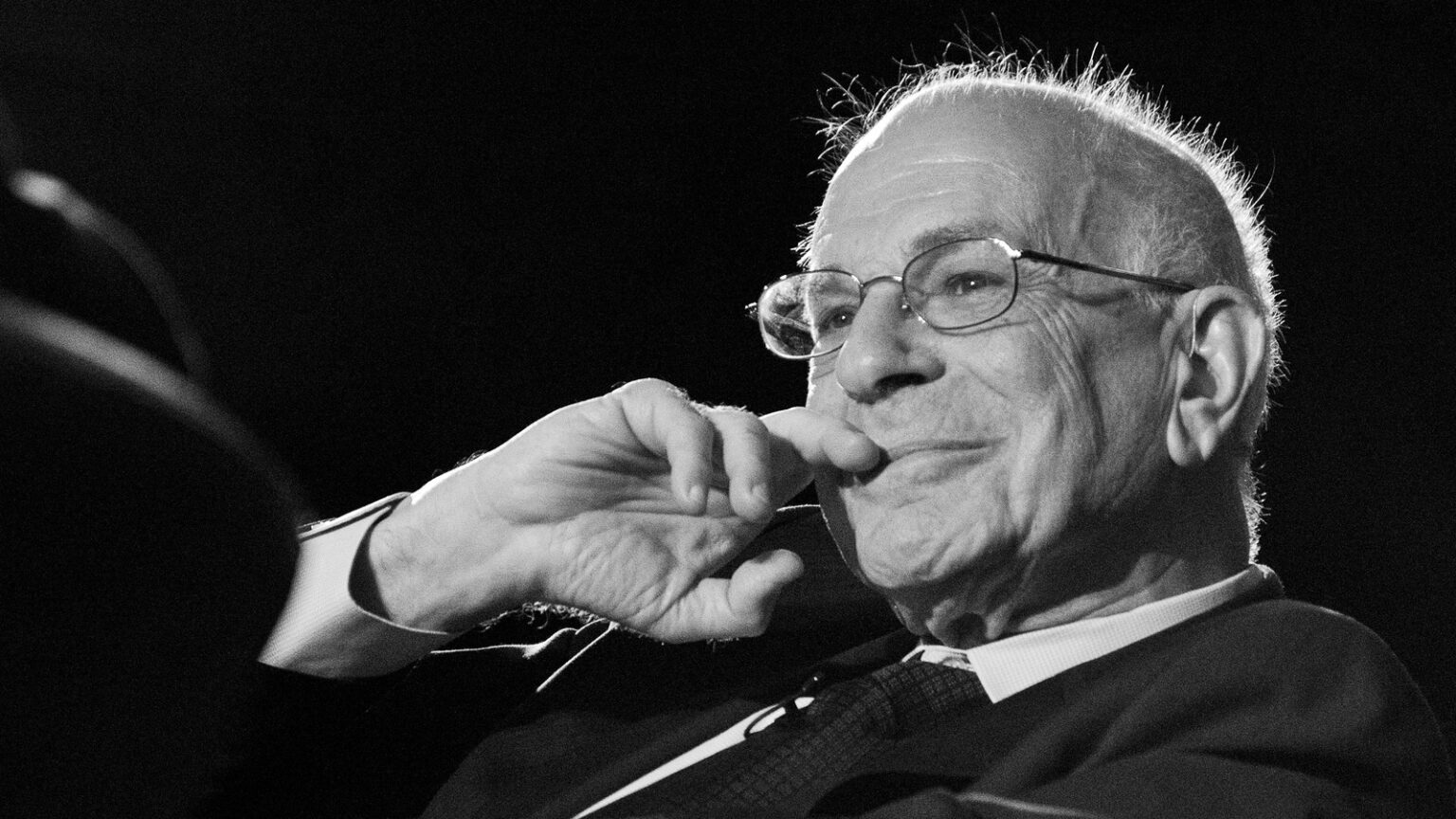
Daniel Kahneman won a Nobel Prize in Economics without being an economist. He was a psychologist, and what he showed, with Amos Tversky, is that people do not decide as classical economic theory assumed. We are not rational calculators coldly weighing costs and benefits. We are something else, faster, we save effort and we are systematically biased.
The mind, he said, works as if it had two systems. System 1 is fast, automatic and intuitive. It recognises a face, dodges a car, answers what two and two make without effort. System 2 is slow, deliberate and costly. It is the one we use to multiply seventeen by twenty-four or to fill in the tax return. They are not two zones of the brain. They are a way of naming two ways of functioning, and the problem is that the fast mode decides far more often than we think, including when it should not.
From this come the biases, which are well documented. There are quite a few. Anchoring makes the first figure we hear condition the whole later negotiation. Loss aversion makes losing a hundred euros hurt more than the pleasure of gaining a hundred. Overconfidence makes us estimate deadlines and budgets that are almost never met. These are not the failings of unintelligent people. Kahneman insisted that he himself, after a lifetime studying them, did not dodge them much better than anyone else.
Knowing the biases does not immunise us against them. Knowing what anchoring is does not stop you from anchoring. That is why Kahneman’s useful conclusion is not “distrust your intuition”, which would also be bad advice. Intuition works very well in predictable environments where we have had time to learn the rules, like an A&E doctor or an experienced firefighter. It fails in noisy, poorly repeated environments, like predicting stock-market moves or the success of a hire. You have to know which pitch you are playing on.
There is one bias that does especially harm in organisations, the one Kahneman called the illusion of validity. We tend to trust our judgements far more than their accuracy warrants, above all when we tell a story coherent with the data in front of us. The problem is that the coherence of a narrative does not guarantee its truth, it only makes us feel sure. A well-told business plan convinces even when its premises are fragile, and the smoother it sounds, the less we question it.
In business, this has a practical consequence. Since you cannot correct biases with willpower, you have to correct them with procedure. Deciding the criteria for a hire before seeing the candidates, so that the charm of the first interview does not carry everything away. Asking for proposals separately before the meeting, so the first to speak does not anchor the rest. The bias is not erased. It is neutralised by the way the decision is defined.
This week’s exercise. Before your next important decision, do a premortem on a sheet of paper (read last week’s article). Imagine that a year has passed and the decision has gone badly. Write, by hand, the story of why it failed, in as much detail as you can. This small exercise forces System 2 into play and brings to light the risks the excitement of the moment was hiding.
Kahneman was not asking us to stop trusting ourselves, but to know when we can. In the decision in front of you, is your instinct speaking from real experience, or from the wish that it turns out well?
Sapere aude.