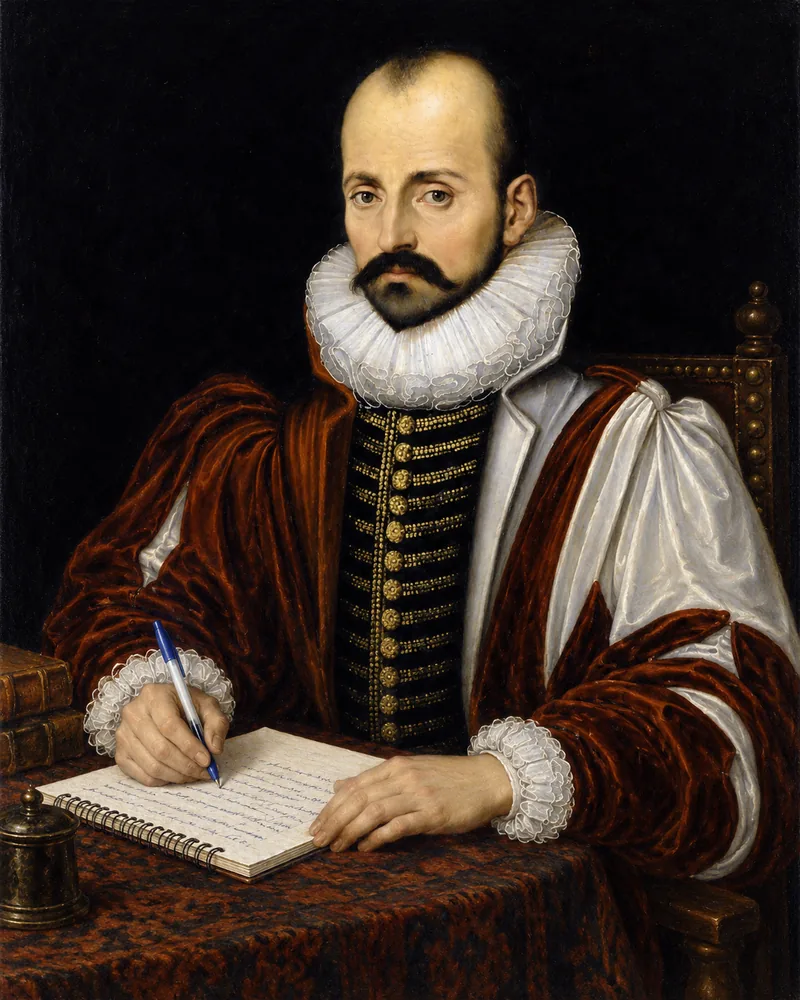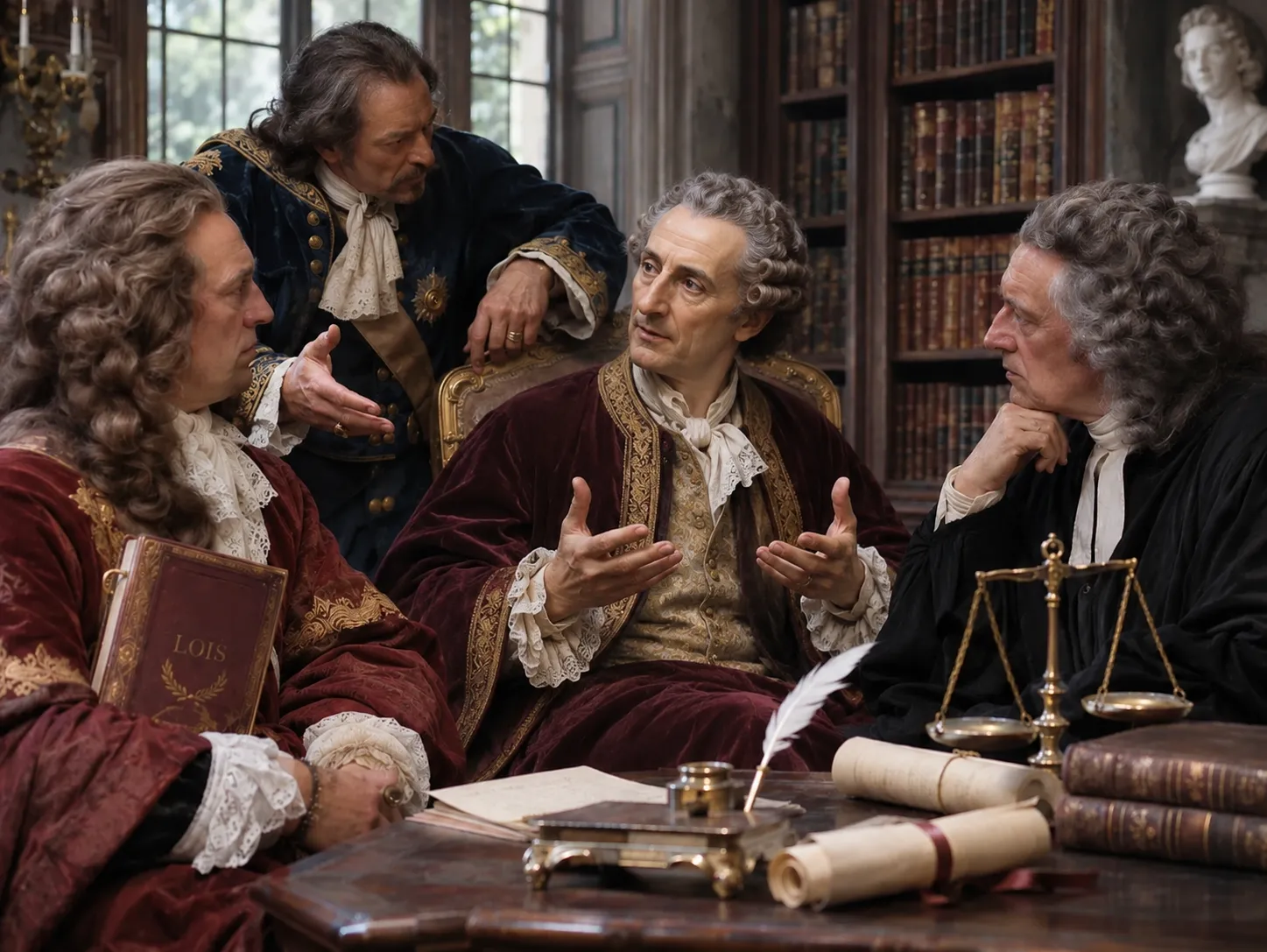
In 1748 a book of more than a thousand pages, which had taken almost twenty years to write, was published in Geneva without its author’s name: The Spirit of the Laws. Its author, Charles-Louis de Secondat, Baron de Montesquieu, was a magistrate from Bordeaux who had traveled across half of Europe studying how countries were governed. Three years later the Church placed the book on the Index of Prohibited Books. Forty years after that, the framers of the United States Constitution were citing it as the work everyone turned to.
The central idea of the book can be summed up in two sentences from Book XI. The first is an observation: “Constant experience shows us that every man invested with power is apt to abuse it, and to carry his authority as far as it will go.” The second is its practical consequence: “To prevent this abuse, it is necessary from the very nature of things that power should be a check to power.” From this comes the separation of the power to make laws, the power to execute them and the power to judge.
What is revolutionary about this approach is not distrust of those who govern, which is as old as politics. It is the solution. Montesquieu does not trust the virtue of those in command, nor their education, nor their good intentions. He trusts design. A good system is one that works even when the person running it is not good. He adds an almost humorous remark: “Who would think it! Even virtue has need of limits.”
The idea reaches far beyond constitutional law. Any human group that concentrates decisions in a few hands faces the same risk, and any group can adopt the same remedy: spread the functions so that none is left without a counterweight.
In business, Montesquieu’s checks and balances take several forms. We have boards with genuinely independent members, audits that do not depend on the audited, a split between whoever approves an expense and whoever pays it, and committees where someone is explicitly charged with disagreeing. They are often seen as bureaucracy that slows things down. In reality, they protect the organization against the day when someone, in good faith or not, makes a bad decision and nobody can stop them. Many of the great corporate collapses share a pattern: a charismatic leader surrounded by people who had neither the standing nor the nerve to say no to that leader.
Artificial intelligence opens a new chapter in this story. As a growing share of decisions is taken by automated systems, Montesquieu’s question returns: who watches the watchers? An algorithm that selects candidates, grants credit or prioritizes customers is also a form of power, and if nobody can review it or appeal against it, it is power without limits.
In our personal lives the principle works on a small scale. Each of us has some area in which we hold power: over a team, over our children, within a couple, in an association. The useful question is who can tell me I am wrong, and whether I listen. If the answer is nobody, it does not mean I am getting everything right. It means I would not know if I were getting it wrong.
When it comes to learning, Montesquieu offers a method before a doctrine. He did not build his theory from abstract principles, but by comparing how laws worked in England, Venice, China and Persia, and why. Learning to look at our own institutions from the outside, setting them beside other ways of doing things, is the best way to discover what is arbitrary about them and what is necessary.
Still, we should not idealize checks and balances. Too many controls paralyze, and there are organizations where nobody can decide anything because everybody can block everything. Montesquieu was not after impotence but balance: power could act, just not without limits. Nor was his portrait of the English constitution, which he had studied at first hand, entirely accurate. The value of his thinking lies not in descriptive precision but in the underlying idea: good government cannot depend on the luck of having good rulers.
This week’s exercise. Think of the area where you have the most decision-making power: your company, your team, your home. On a sheet of paper, list the important decisions you have made over the past six months and, beside each one, write down who could have challenged it before it became final. If for many of them the answer is nobody, think about what check you could create: a person, a standing question, a compulsory step.
Who around you has the authority and the courage to stop you when you are wrong?
Sapere aude.